


What Is EBOO Treatment?
EBOO stands for extracorporeal blood oxygenation and ozonation. “Extracorporeal” simply means “outside the body.”
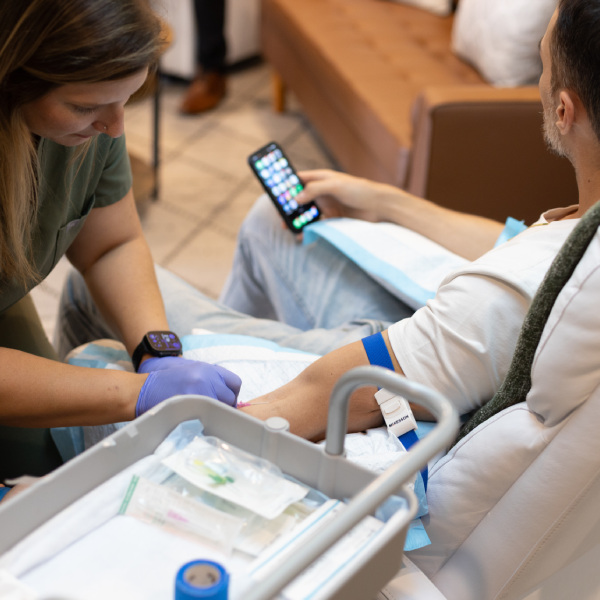
During a session, blood is drawn through an IV line in one arm. It then passes through a special filter, similar in design to a dialysis filter, where it is exposed to a precise mixture of medical-grade oxygen and ozone.
The treated blood is returned through an IV in the other arm in one continuous loop.
But here’s the truth..
The technique was developed in Italy by nephrologist Dr. Nicola Di Paolo and ozone researcher Dr. Velio Bocci at the University of Siena, and their first human report was published in 2000.
EBOO is an extension of an older method called major autohemotherapy, in which a single bag of about 250 mL of blood is ozonated and reinfused. With EBOO, up to about 4.8 liters of blood can be treated in one hour.
In other words: it delivers ozone to a far larger volume of blood.
How Ozone May Work: The Science of Hormesis
Ozone (O3) is a highly reactive form of oxygen. Breathing it in damages the lungs, which is why medical ozone must never be inhaled. Inside blood, however, ozone reacts within seconds with fats and antioxidants.
Those reactions create short-lived signaling molecules, such as small amounts of hydrogen peroxide and lipid oxidation products.
Here’s how: Researchers believe these messengers work through a principle called hormesis.
Hormesis is the idea that a small, controlled stress prompts the body to build stronger defenses, much like exercise strengthens muscle. A key player is Nrf2, a protein that acts like a master switch for the body’s own antioxidant and detoxification genes, including those that make glutathione.


One more thing you should know..
A widely cited review by Sagai and Bocci (2011) proposes that moderate oxidative stress from ozone may activate Nrf2 while calming NF-κB, a major driver of inflammation. A later review by Galle and colleagues (2019) describes the same pathway in more detail. Both reviews stress the same point: dose is everything.
The line between a helpful signal and harmful damage depends on how much ozone is used. This is why EBOO must be delivered by trained clinicians using carefully controlled protocols.
What Does the Research Actually Show?
This is where honesty matters most. The best-known clinical study is a 2005 controlled trial in patients with peripheral artery disease (PAD), a condition that reduces blood flow to the legs. Researchers compared EBOO with prostacyclin, a standard medication.
They reported that EBOO was much more effective at healing skin ulcers, and no side effects were recorded across 210 treatments.
But that’s not all.
The same research group has reported clinical experience in coronary disease, severe high cholesterol, cholesterol embolism, and sudden hearing loss of vascular origin.
There are also individual case reports, including necrotizing fasciitis and a 2025 case report on urinary toxin levels in an older adult.
So, what’s the solution?
Still, the evidence has real limits. Most studies are small, many come from one research group, and there are no large, independent, blinded randomized trials.

Many popular claims, such as EBOO for Lyme disease, mold illness, long COVID, or anti-aging, are not yet supported by high-quality human research. For now, we consider EBOO a promising but still emerging therapy, best suited as a supportive option rather than a primary treatment.
Preparing for EBOO? Key Considerations About Safety
It is important to know where EBOO stands with regulators. The U.S. Food and Drug Administration states that ozone is a toxic gas with no known useful medical application, and it does not approve ozone devices for conditions without proof of safety and effectiveness (21 CFR 801.415). EBOO is therefore not an FDA-approved treatment.
Which means:
Because EBOO uses an external blood circuit, it carries risks beyond those of a standard IV. Anticoagulants are needed to keep blood from clotting in the tubing, which can increase bruising or bleeding. Other possible issues include vein irritation, lightheadedness, drops in blood pressure, infection at the IV site, and, rarely, gas embolism if equipment is used improperly.
In clinical practice, EBOO is generally avoided or used with great caution in people with:
- G6PD deficiency (a genetic condition that makes red blood cells fragile under oxidative stress)
- Pregnancy
- Bleeding disorders or uncontrolled anticoagulant use
- Uncontrolled hyperthyroidism
- Recent heart attack, stroke, or unstable heart conditions
This is why careful screening, including lab work, must come before any session.
A Functional Medicine Approach to EBOO
At Oasis Health and Medicine, we never start with the therapy. We start with you. Functional medicine asks why your body is struggling in the first place, whether the driver is chronic inflammation, poor circulation, gut dysfunction, nutrient gaps, or metabolic imbalance.
Here’s the bottom line.
Before considering any advanced therapy, we use comprehensive functional lab testing. That may include a complete blood count, G6PD screening, metabolic and lipid panels, inflammatory markers such as hs-CRP, and nutrient status. These results help us decide whether a therapy like EBOO makes sense, or whether other tools would serve you better.

We also build the foundations that make any treatment more effective: anti-inflammatory nutrition, sleep, stress resilience, gut health, targeted supplements, and IV nutrient therapy when appropriate. A therapy that challenges your antioxidant system works best when that system is well nourished.
Is EBOO Right for You?
EBOO is an intriguing therapy with a plausible biological basis and some encouraging early data, especially for circulation-related conditions. It is not a cure-all, and the science is still catching up to the marketing. The safest path is an honest conversation with a clinician who can weigh the evidence against your health history.
Let me explain.
If you are curious about EBOO or want to explore a root-cause plan for chronic inflammation, fatigue, or circulation concerns, the team at Oasis Health and Medicine is here to help.
Book a EBOO therapy session at our San Diego clinic.
This article is for educational purposes only and is not a substitute for individual medical advice.
References
- Di Paolo N, Bocci V, Garosi G, et al. Extracorporeal blood oxygenation and ozonation (EBOO) in man. Preliminary report. Int J Artif Organs. 2000;23(2):131-141.
- Di Paolo N, Gaggiotti E, Galli F. Extracorporeal blood oxygenation and ozonation: clinical and biological implications of ozone therapy. Redox Rep. 2005;10(3):121-130.
- Di Paolo N, Bocci V, Salvo DP, et al. Extracorporeal blood oxygenation and ozonation (EBOO): a controlled trial in patients with peripheral artery disease. Int J Artif Organs. 2005;28(10):1039-1050.
- Di Paolo N, Bocci V, Cappelletti F, et al. Necrotizing fasciitis successfully treated with extracorporeal blood oxygenation and ozonation (EBOO). Int J Artif Organs. 2002;25(12):1194-1198.
- Bennett SJ, Kuo J, Wang S, Salway RJ. Observed reduction in urinary toxin excretion with EBOO treatment in an 88-year-old with chronic anemia: a case report. Cureus. 2025;17(12):e99948.
- Sagai M, Bocci V. Mechanisms of action involved in ozone therapy: is healing induced via a mild oxidative stress? Med Gas Res. 2011;1:29.
- Galiè M, Covi V, Tabaracci G, Malatesta M. The role of Nrf2 in the antioxidant cellular response to medical ozone exposure. Int J Mol Sci. 2019;20(16):4009.
- U.S. Food and Drug Administration. 21 CFR § 801.415 – Maximum acceptable level of ozone.


